


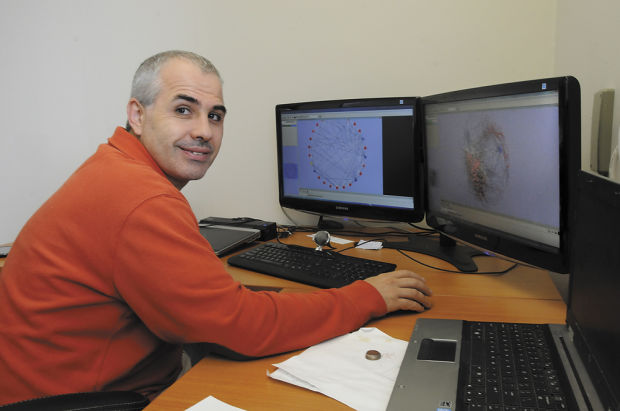
Oregon State University team is part of efforts to develop treatment for women infected with HPV
Researchers at Oregon State University, working with scientists around the world, have discovered a potential screening tool for diagnosing cervical cancer and determining the best avenues for treatment.
Cervical cancer is caused by HPV (human papillomavirus), a sexually transmitted virus.
“You don’t have cervical cancer if there is no HPV infection,” said Andrey Morgun, an associate professor in OSU’s College of Pharmacy. “Basically it is known that the virus is necessary for cervical cancer.”
There are two types of vaccines for HPV. The first is preventative, and Morgun emphasized that his study has nothing to do with it.
“This is a great vaccine,” Morgun said. “Vaccines are extremely important.”
People are also reading…
The second type is used to treat HPV after the person is already infected with the virus. It performs in a similar manner to antiviral drugs and aims “to eliminate the virus,” Morgun said.
However, this second type has potential negative effects, Morgun said. Most women infected with HPV naturally eliminate the virus, but some — about 10 percent — do not and develop chronic infection.
Here’s why the second type can cause negative effects:
When HPV invades the cells, it can exist in two forms. It exists free in the cells as an original episomal virus or it can integrate into the cell’s DNA.
In cells where the virus has not been integrated and exists only in the episomal virus form, the second type of antiviral vaccine can be helpful.
But once it’s integrated, eliminating the original virus may lead to malignant cell growth and tumors. Cells in which the wild virus is eliminated and the integrated virus remains are prone to develop into invasive cancers.
Pretumorous cells can “acquire the ability to orchestrate immune response against the virus,” Morgun said. Only tumor cells that develop this ability are very likely to turn into invasive cancers.
The integrated virus encodes oncogenes, but the episomal virus inhibits these genes. If the original episomal virus is not eliminated from the cell, it serves to suppress these genes, but if the original virus is destroyed, the cells grow and form tumors.
Morgun and collaborator Natalia Shulzhenko, an assistant professor in the College of Veterinary Medicine at OSU, as well as collaborators from Brazil, Norway and around the United States, analyzed genomic data to find out what might be the cause of cervical cancer.
Precancerous lesions could be screened for the abnormalities in genes that lead to cancer, and these women could receive individualized treatments developed to inhibit the women’s particular cancer. Those women who do not have the integrated virus could receive the second type of vaccine. Different women have aberrations in different genes in the cancerous cells that require specific, targeted treatment, Morgun said.
“This would discriminate between those women who would go into invasive cancer and those women who wouldn’t,” Morgun said. “Right now what would be necessary is to set up new studies, prospective studies, that would check how well we can predict this.”
These findings were published recently in Nature Communications.


